WHAT IS COLOUR ANALYSIS? DO I NEED IT?
Colour is more than a visual choice. It changes how you look and how you feel. When it comes to personal style, wearing the right colours can lift your natural features and genuinely boost your confidence. Whether you're navigating a demanding career, building a capsule wardrobe, or just want your everyday look to work harder for you, understanding colour analysis can change how you shop and how you get dressed each morning.
What Is Colour Analysis?
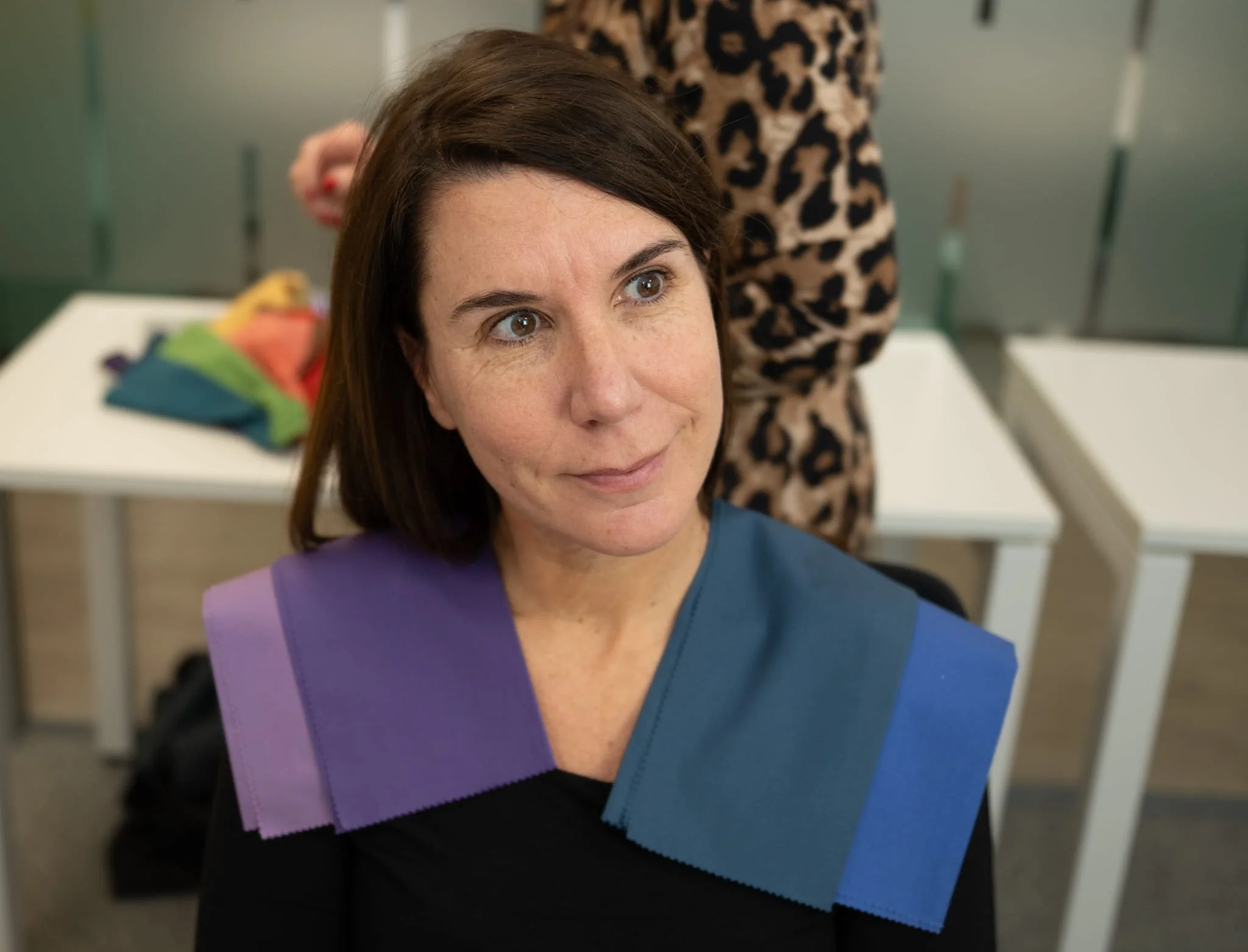
Colour analysis is the process of identifying which colours, in clothing, make-up and even jewellery, work with your natural skin tone, hair and eye colouring rather than against it.
Everyone has undertones that sit somewhere on a warm-to-cool spectrum, and once you know yours, choosing what to wear becomes far more straightforward. It's the foundation of a colour analysis session with us, and the starting point for building a wardrobe that consistently works for you.
Colour doesn't just affect how you look, either. It shapes how you feel and how others read you too, which is its own fascinating area we've explored in our guide to colour psychology.

The Impact of Wearing Your Best Colours
When you wear colours that align with your natural undertones, your skin looks healthier, your eyes brighter, and your whole look more pulled together. Wear the wrong ones, and even a well-cut outfit can leave you looking tired or washed out. This isn't just a nice-to-have. There are real, practical benefits to getting it right, from quicker shopping trips to a wardrobe where everything actually goes together. We've written more about exactly what those benefits of a colour analysis look like day to day, if you'd like to read further.

How to Discover Your Best Colours
At its simplest, discovering your best colours means identifying your undertone, whether that's warm, cool, or neutral, and finding the palette that suits it.
But it goes deeper than four broad categories. Colour analysis actually works across 18 distinct seasons and sub-seasons, which is a proper method in itself rather than a quick guess.
We've broken the full system down in detail in our guide to the 18 seasons of colour analysis, including how the sub-seasons work and why two people in the same broad season can still need quite different shades.
Do I Need a Professional, or Can ChatGPT or Other AI Do This?
It's a fair question, and one we get asked more and more. Online quizzes, apps, and tools like ChatGPT can now offer a version of colour analysis from a photo, and it's easy to see the appeal.
The trouble is, colour analysis is a more delicate job than it looks. Lighting changes everything. A photo taken under warm indoor lighting, daylight, or your phone's camera flash can each shift how your skin tone reads, sometimes dramatically. Screen calibration adds another layer of distortion on top of that. An AI tool can only work with what it's shown, and what it's shown is rarely a true, consistent read of your actual colouring.
There's also the matter of nuance. Two people can share the same broad season and still need noticeably different shades within it, depending on the specific balance of their undertone, contrast, and depth. Spotting that difference takes a trained eye and real experience, not just a category label. That's what a professional colour analysis session gives you: a considered, in-person read of your colouring, not an automated best guess.
Practical Ways to Integrate Your Best Colours into Your Wardrobe
Once you know your palette, the easiest way in is through your staples. Start with neutrals - black, white, navy, beige - whichever sit within your palette, then layer in your best accent colours through blouses, scarves, or accessories. Colour is also a great way to let your personality show, whether that's a bold pair of shoes, a statement bag, or a colourful jacket added to an otherwise neutral outfit.
If you're working with a professional, this part tends to happen naturally as part of the process. Many clients choose to follow their colour analysis with a wardrobe edit or a personal shopping session, where we put the palette into practice together, going through what you already own and shopping for what's missing, so you leave with a wardrobe that works rather than just a list of colours to remember.
If you'd rather put your palette into practice yourself, the main thing to keep front of mind is your tone and undertone together, not just the colour name. Two "blues" can behave completely differently on you depending on whether they lean warm or cool, so it's worth testing a shade against your skin in natural daylight before committing to it, rather than going by how it looks on a hanger or a screen.
A Few Common Questions
How long does a colour analysis session take?
A typical session takes around an hour, giving enough time to properly test a full range of tones against your natural colouring rather than rushing to a quick answer.
Can my colour season change over time?
It can shift, though usually gradually. Ageing naturally softens hair, skin and eye colour over the years, which can move some people from a brighter season into a softer one. It's one of the reasons a lot of clients come back for a refresh a few years down the line.
Do I need to bring anything to my session?
Just yourself, ideally without make-up or with it kept minimal, so we can see your natural colouring clearly from the start.
If you'd like a more personalised experience, we offer colour analysis consultations in London to help you discover which colours will truly work for you, alongside personalised image consultancy sessions if you'd like to take things further.
Let's chat about finding your best colours.
One Of A Style
Stefania Bartolomei,
Personal Stylist London